I was gratified to see my work on the front page of the New York Times this morning. Read the story here.
Last week I photographed this story about the battles between neighbors over fracking and banning natural gas drilling. I've shot for the Times before but I never know how the photos will get used, so it's nice to be featured on A1 of the Sunday paper.
UPDATE 10/31: An additional story and photo are now online here.
10.30.2011
fracking for the NYT

10.16.2011
Hunter Mountain
On Monday I took the day off and went to climb Hunter Mountain in the Catskills. Of course I brought my camera. Here is the result.
(Click on thumbnails to see larger versions.)


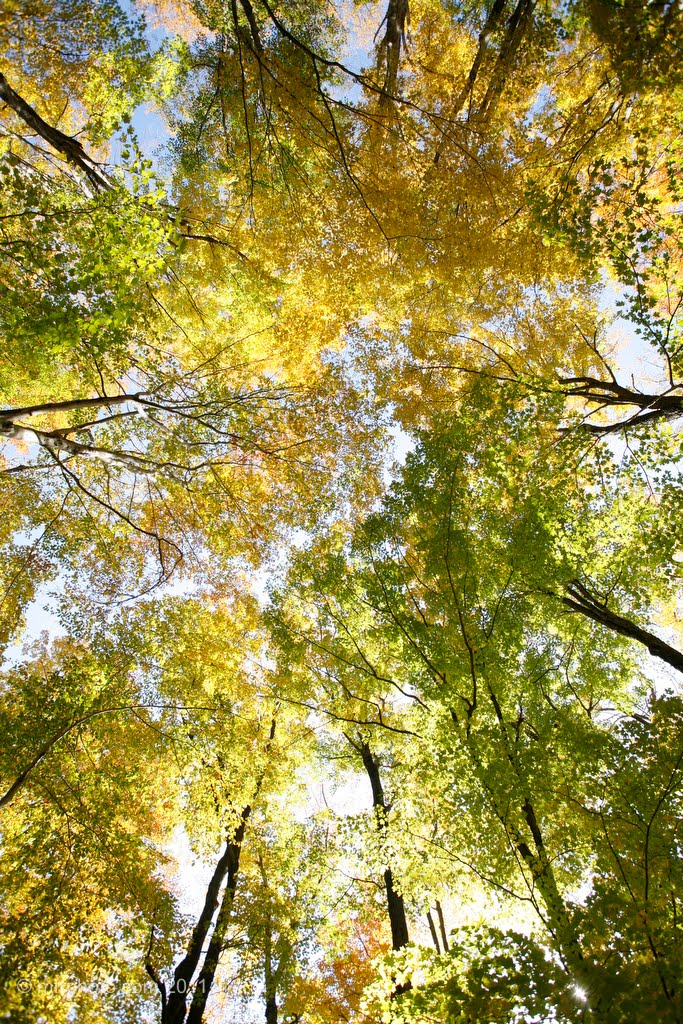


The hike was part of the annual Lark in the Park, a week of fall celebrations with outdoor activities organized by the Catskill Center and the Catskill Mountain Club. It was great to get up and out — lately it seems I'm only in the Catskills to photograph flood damage.
10.02.2011
Nature photography workshop

Maple leaf in Wilber Lake
The class is Sat. Oct. 8, 3 to 6 pm, at the lovely SUNY Cooperstown Graduate Program facility near the Fenimore Museum. (Directions here and map here).
Sign up here: http://www.oneonta.edu/academics/conted/noncredit/default.asp
Or call: 800-SUNY-123 x2548 or (607) 436-2548
Workshop description:
There is natural beauty all around us, but creating beautiful nature photographs requires patience and practice. Most of all, it requires us to slow down and look carefully. For this class, you should know how to use your camera, but the kind you have does not matter. Bring your camera plus two favorite nature photos (printed) with you to class- they can be yours or anyone's. If you have them, also bring your camera manual, tripod, macro and telephoto lenses. Wear comfortable shoes for walking.
Next workshop:
Portrait Photography. Mon, Nov. 14: 6-9 pm: Hunt Union, SUCO campus, Oneonta
10.01.2011
Here Comes the Rain Again
On terror, floods and a vanishing decade

A muddy flag hangs in a flooded basement in Binghamton.
It’s 9/11 and I am driving down Interstate 88 towards Binghamton, towards the flood. We live on the backside of the Catskills, a landscape of narrow valleys where a creek is never far away. Two weeks ago, half the towns in this corner of New York were washed out in Hurricane Irene.

Flood cleanup in Prattsville.
In villages like Schoharie and Margaretville and Prattsville, we were still digging out the mud, our boots and basements still wet, when we got hammered again by Tropical Storm Lee. Ten inches of rain in 24 hours and the rivers were soon muddy roiling torrents.

Silver Creek in Oneonta is usually a quiet, mossy trickle this time of year.
The Binghamton area, where the Chenango River spills into the Susquehanna, was the worst hit. 20,000 people are still evacuated. Water poured over banks and berms, flooding bridges and entire neighborhoods. Today I'm photographing the aftermath for the Binghamton Press & Sun-Bulletin.
I drive through Otego. Three days ago, this valley was impassable. I-88 follows the Susquehanna River, as does NY Rte 7, and County Hwy 48. After the water covered the floodplains and cornfields, it came for the roads. I stood here near Exit 13, middle of the empty interstate, watching Otego Creek stream over the pavement before turning my car around. That day, it took me two hours on the mountain roads to find a way through.

Butternut Creek water rises over the bridge in Gilbertsville.
In Otego, the mud lines are clearly visible. A layer of silt coats every plant and wall, up to 2, 3, 4 feet off the ground. Now the water is finally receding. The highway is open except for a mudslide in Chenango. Mud and water, that’s all we’re thinking about now.

Johnson City. Many roads remain flooded three days after the storm.
In NYC, however, they are thinking not about water rising but planes falling. For 9/11, NPR is trying to broadcast simultaneously from Manhattan, the Pentagon and Shanksville, PA, while I drive downriver. The result is a disjointed potpourri of speeches and grief. Politicians recite poems and psalms. Bells toll for each plane crash. Amazing Grace, somber, a cappella. Two by two, the survivors at Ground Zero read from the endless list of names. But every time there’s another moment of silence, the damn Morning Edition announcer interrupts it. We are afraid of silence.
I pass Unadilla. On Thursday, they were underwater on 3 sides. A firetruck was the last vehicle down Main Street before they close it. I stopped then in the middle of the intersection:
The water over the road is the color of coffee with too much milk. A state trooper tells me: “I can’t advise you to cross, but I won’t stop you from trying.” I get out and walk into the moving water. There’s a sheen of oil on top, swirling. I feel the current as the river overtops my boots. I keep my eyes on the double yellow line and I’m soon across. A second officer is turning motorists back to the highway. I slosh back to my car and make it to Exit 10.

Houses underwater in Unadilla near Exit 10.
On NPR, the reading of names continues. Of all the speakers, it is Bush — the one we loved to hate, the one who marched us to war nearly a decade ago — who brings tears to my eyes. He reads a letter from Lincoln to
"the mother of five sons who have died gloriously on the field of battle.” Hearing that voice, I talk back to my radio: What might have happened had we sought peace? Why did you do it?
He answers: “I feel how weak and fruitless must be any words of mine which should attempt to beguile you from the grief of a loss so overwhelming.”

It’s five miles from Unadilla to Sidney, same distance as Central Park to the WTC. I pass Sidney, where they are still underwater, and on to Ninevah when NPR plays the screams of eyewitnesses watching as the South Tower falls. Governor Cuomo, who was up here just last week, taking flood photos out the window of his SUV, quotes FDR on freedom from fear.Clinton Street in Sidney.

Photograph in Margaretville by Gov. Andrew Cuomo.
In Chenango, I’m detouring around the mudslide when Paul Simon gets on stage. “Hello darkness, my old friend,” he sings. “I've come with talk with you again.” I’ve seen houses washed downstream. “Neath the halo of a streetlamp, I turned my collar to the cold and damp.” I’ve seen basements still full to the top step.
I think of my friend Andrew, who lives just up from the Pentagon. In 1999, when we moved to Kazakhstan, Andrew stored a box for us in his basement, and he recently shipped it back. I opened it last night and wondered at the familiarity of the past. How a dozen years can vanish in a moment. Here is a notebook with phone messages. A dinner receipt from Las Placitas. A book I’ve been looking for — I knew it would turn up, how is possible it’s been missing twelve years?

Shoes float inside a Sidney home.
“Fool, said I, you do not know, silence like a cancer grows.” I’ve seen people despair over what they’ve lost, but many more resolute, determined to salvage what they can. “Words, like silent raindrops fell, and echoed in the wells of silence.” I’m going to Binghamton to listen. So I can report how people are surviving the biggest disaster in their own lives.
Paul Simon performs on 9/11.
I feel no older, but how different the world is a decade after this all began. Can you remember 2001? We were so hopeful then. We thought there could be peace. Was it simply naiveté? Because I can see now, the wars and the floods, they are never going to stop. Not until we change the ways we live. Until we become brave enough to accept some blame.
From Ground Zero, Amazing Grace again, haunting on flute. Former Governor Pataki reads from Billy Collins’ poem The Names:
Names rising in the updraft amid buildings.
Names silent in stone
Or cried out behind a door.
Names blown over the earth and out to sea…
So many names, there is barely room on the walls of the heart.
Why do we memorialize our suffering? Will it really help us heal? In Binghamton, I get out of my car in the mud below Riverside Drive and get to work.

The flooded Susquehanna River, in Vestal.
Next post: photos from Binghamton.
9.09.2011
floodwaters rising

The Susquehanna River floods Sidney, NY, after Tropical Storm Lee.
I've been photographing the flood across upstate NY and I can hardly believe what I've seen. Today I was waist-deep on River Street in Sidney with the waters of the Susquehanna still rising.
I'm just posting this one photo for now and as soon as life calms down I'll share more.
You can also see a sampling of my flood photos on the Zuma Press website.
7.21.2011
Flying Cloud camp
 Campers at Flying Cloud, one of the Farm & Wilderness summer camps, dance around the massive bonfire during the camp's first naming ceremony of the year.
I have returned from my week at Farm & Wilderness and started to edit through the 5,000+ photos I shot for them. I definitely love having a week for an assignment as it gives me time to really settle into the rhythms of a place and understand where the best pictures are.
More F&W photos will show up eventually on the Education pages of my website.
7.20.2011
dead hares!

What exactly is the Dead Hare Radio Hour? I'm still not 100% sure, but I participated in a forum for them on the links between art, nature and technology, and we talked about artist professional development.
Aired last night on WVKR, Vassar's station in Poughkeepsie, and now online here: http://deadhareradio.matthewslaats.com/projects/2011/07/19/show-17-nyfa-mark-in-conversation/
7.05.2011
Farm & Wilderness camps

Early this morning I arrived in Vermont for an assignment working for Farm & Wilderness camps. They've hired me to spend a week photographing daily life and activities at their five summer camps near Plymouth, VT. I'm looking forward to this – I can think of no place I'd rather be in July than in the woods, in the mountains, at camp.
Here, the mist rises over the Indian Brook apple orchard, seen across Woodward Reservoir before dawn.
7.03.2011
mother of the groom, mother of the bride
 Congratulations to Rachael Milavec and Mike Shaughnessy on your beautiful wedding and your future lives together. Mike's mom and Rachael's mom were busy snapping photos as the couple danced their first dance together.
I seldom shoot weddings, yet I always enjoy it when I do. I make it clear ahead of time that I am a photojournalist. I'll be there looking for stories to tell. Interesting moments. People being themselves. Sure, I can do family portraits, but I prefer the natural to the staged.
I recently got into a 3-day-long discussion with an artist friend. I contended that my photos tell stories. They capture genuine moments of people's lives. I love that I get to observe and explore such varied experiences people have. I then distill what I see into moments that reflect the personalities and events I witness.
My friend told me that my photos are works of art, that they are really about mood, and that they say as much about me as about the nominal subject within the image. I suspect we're both right. What I saw at the wedding was joy, kinship, and a bit of nervousness. I am so glad I could be part of the celebration! Congratulations!
6.27.2011
Making a statement

Why do we make photographs?
Come see 15 answers this Thursday, June 30, 5-7, at the opening of Statement, our invitational exhibit of central NY photographers, at the Smithy Pioneer gallery in Cooperstown. The show runs through July 28.
This is my first time curating an exhibit. We spent today hanging the show, and I am excited about the amazing work.
We asked each photographer what motivates you? What inspires you? Many of us support ourselves by making photographs for clients, but we also create work for ourselves. Artwork we care about so deeply that we continue to create it even when we are busy, tired, or poor.
The 15 photographers in this exhibit describe how they make photographs as meditation, as discovery and as expression. Making photographs helps us to see the world more clearly.
Gallery hours and info here.
6.02.2011
closing reception for Philly exhibit

On Saturday June 4, 3 - 5 pm, there will be a closing reception for my After Chernobyl exhibit in Philadelphia.
Four of my photos from Chernobyl are part of an alumni exhibit in the List Gallery at Swarthmore College. The gallery is in the Lang Performing Arts Center. This is where the reception will be.
My full exhibit is across campus in McCabe Library. Both exhibits will be open until Monday.
4.26.2011
remembering Chernobyl

Vasily Fedirko stands in the Pirogovichi village graveyard on April 26 as he pays tribute to his wife’s parents. Every year at Easter time, Ukrainians return to their native villages to eat a ceremonial meal in the cemetery and remember those who have died. Especially in Chernobyl-affected areas, this tradition has become a reunion as former neighbors come together once more to feast and reminisce. Vasily and his wife Valentina moved back to Pirogovichi in 2003 when her parents died. This year their daughter Oksana came all the way from the Russian Far East for the holiday.On this day, 25 years ago, the Chernobyl tragedy began. It hasn’t ended yet.
Some 350,000 people were displaced by the accident. They will never return home. 850,000 liquidators worked in the clean up after the accident. Many of them now have health problems. A total of six million people still live in the contaminated region today.
Every year, at solemn anniversaries such as today, somber government officials stand up and make speeches about how we must never forget. They will make these speeches today.
I disagree. We will forget. In fact, we must. We can’t spend all our lives mourning the tragedies and mistakes of the past. At best, we would all become paralyzed.
Memory is a curious thing. It ebbs and flows. After my years in the Chernobyl region, I remember it 100 times a week, but it is not the tragedy I recall. I see the lilac and cherries blooming here and I think of spring arriving in the Ukrainian village where I lived. I get on a train and I remember Lyuda and her friends playing the card game Durak on their daily commute to the Chernobyl plant. I see a tattoo and I grieve for a moment for Vasily, who died last year of cancer at age 57. I picture the drawing of his wife, which he tattooed on his shoulder after she died, also from cancer, in 2007.
The more personal a memory is, the more different ways it gets triggered. This is one reason I share people’ stories, to personalize the catastrophe. And this is why I object to the news wire photos you’ll see today. Essentially the same shots you saw last year: The abandoned Ferris wheel in Pripyat. A dosimeter outside the Chernobyl plant. Mourners at the memorial in Slavutych. How quickly our vision narrows and our collective memories grow worn!
The people who live near Chernobyl don’t think and talk about the accident every day. How could they? They have lives to lead. The ones who can’t cease talking about it sound like soldiers with post-traumatic stress—not the healthiest of the survivors.
So let us not dwell on death. Let’s celebrate 25 years of perseverance. Let’s ask how we can help those who are still struggling. Let us remember and honor the tragedy today, and tomorrow, let us forget, and go on to remember other things. The lilac and cherry trees are blooming.
4.21.2011
media roundtable tomorrow
On Friday, I'll be part of a media roundtable discussing environmental disasters. We'll talk about the BP oil spill, Chernobyl and Fukushima.
The show is Your Call. It airs on NPR stations in San Fransisco (KALW 91.7) and Santa Cruz (KUSP 88.9).
Your Call, a daily public affairs program, is on from 10 to 11 PST/1:00 to 2:00 pm Eastern, rebroadcast at 5:00 pm PST.
4.17.2011
AP: Exhibit chronicles lives of workers at Chernobyl
Associated Press ran a nice story about my New York exhibits yesterday. And almost all of it was true. (3 points for anyone who can find one of the small errors...)
NEW YORK (AP) — Families walk their children to school. Teenage girls smile backstage before a concert. Couples work out at a gym not far from villages where subsistence farmers draw well water and raise crops.http://www.google.com/hostednews/ap/article/ALeqM5ik-YGS3iJwX6tE8j0bR5GK77ORNQ?docId=ce32d4fdf3e242c3ad22489996802596
Welcome to the present-day Chernobyl region.
4.13.2011
New York exhibit openings
Next on the agenda: my two Chernobyl exhibits in New York City open this coming week. Really looking forward to the receptions. Click on the fliers to read details.
Ukrainian Museum: Sun. April 17, 2 to 5 pm
Ukrainian Institute: Tues. April 19, 6 to 10 pm
Additional New York events are coming up April 26, 27, 29 and 30. More information here.
Subscribe to:
Posts (Atom)