Blog posts

4.26.2011

remembering Chernobyl


Vasily Fedirko stands in the Pirogovichi village graveyard on April 26 as he pays tribute to his wife’s parents. Every year at Easter time, Ukrainians return to their native villages to eat a ceremonial meal in the cemetery and remember those who have died. Especially in Chernobyl-affected areas, this tradition has become a reunion as former neighbors come together once more to feast and reminisce. Vasily and his wife Valentina moved back to Pirogovichi in 2003 when her parents died. This year their daughter Oksana came all the way from the Russian Far East for the holiday.
On this day, 25 years ago, the Chernobyl tragedy began. It hasn’t ended yet.

Some 350,000 people were displaced by the accident. They will never return home. 850,000 liquidators worked in the clean up after the accident. Many of them now have health problems. A total of six million people still live in the contaminated region today.

Every year, at solemn anniversaries such as today, somber government officials stand up and make speeches about how we must never forget. They will make these speeches today.

I disagree. We will forget. In fact, we must. We can’t spend all our lives mourning the tragedies and mistakes of the past. At best, we would all become paralyzed.

Memory is a curious thing. It ebbs and flows. After my years in the Chernobyl region, I remember it 100 times a week, but it is not the tragedy I recall. I see the lilac and cherries blooming here and I think of spring arriving in the Ukrainian village where I lived. I get on a train and I remember Lyuda and her friends playing the card game Durak on their daily commute to the Chernobyl plant. I see a tattoo and I grieve for a moment for Vasily, who died last year of cancer at age 57. I picture the drawing of his wife, which he tattooed on his shoulder after she died, also from cancer, in 2007.

The more personal a memory is, the more different ways it gets triggered. This is one reason I share people’ stories, to personalize the catastrophe. And this is why I object to the news wire photos you’ll see today. Essentially the same shots you saw last year: The abandoned Ferris wheel in Pripyat. A dosimeter outside the Chernobyl plant. Mourners at the memorial in Slavutych. How quickly our vision narrows and our collective memories grow worn!

The people who live near Chernobyl don’t think and talk about the accident every day. How could they? They have lives to lead. The ones who can’t cease talking about it sound like soldiers with post-traumatic stress—not the healthiest of the survivors.

So let us not dwell on death. Let’s celebrate 25 years of perseverance. Let’s ask how we can help those who are still struggling. Let us remember and honor the tragedy today, and tomorrow, let us forget, and go on to remember other things. The lilac and cherry trees are blooming.

4.21.2011

media roundtable tomorrow

On Friday, I'll be part of a media roundtable discussing environmental disasters. We'll talk about the BP oil spill, Chernobyl and Fukushima.

The show is Your Call. It airs on NPR stations in San Fransisco (KALW 91.7) and Santa Cruz (KUSP 88.9).

Your Call, a daily public affairs program, is on from 10 to 11 PST/1:00 to 2:00 pm Eastern, rebroadcast at 5:00 pm PST.

4.17.2011

AP: Exhibit chronicles lives of workers at Chernobyl

Associated Press ran a nice story about my New York exhibits yesterday. And almost all of it was true. (3 points for anyone who can find one of the small errors...)

NEW YORK (AP) — Families walk their children to school. Teenage girls smile backstage before a concert. Couples work out at a gym not far from villages where subsistence farmers draw well water and raise crops.

Welcome to the present-day Chernobyl region.
http://www.google.com/hostednews/ap/article/ALeqM5ik-YGS3iJwX6tE8j0bR5GK77ORNQ?docId=ce32d4fdf3e242c3ad22489996802596

4.13.2011

New York exhibit openings

Next on the agenda: my two Chernobyl exhibits in New York City open this coming week. Really looking forward to the receptions. Click on the fliers to read details.

Ukrainian Museum: Sun. April 17, 2 to 5 pm

Ukrainian Institute: Tues. April 19, 6 to 10 pm

Additional New York events are coming up April 26, 27, 29 and 30. More information here.

4.09.2011

Chicago exhibit open

My After Chernobyl exhibit opened last night at the University of Chicago. Here is a story broadcast on the WGN Evening News.

4.04.2011

Chernobyl exhibit on tour


I am excited that my After Chernobyl exhibit is on tour this spring, with shows in NYC, Philadelphia, Chicago and Madison, Wis. Here are details about all the events:

Philadelphia:
(Swarthmore College, Swarthmore, PA)
• Exhibit dates: April 6 to June 10
• Opening lecture and reception: April 6, 4-7 pm
• Gallery talks April 16, 10 am and 1:30 pm, April 17, 1 pm
Exhibit details here.

Chicago:
(University of Chicago)
• Exhibit dates: March 28 to May 20.
• Opening lecture and reception: April 8, 6 to 8:30 pm
Exhibit details here:

New York City:
(Ukrainian Museum, East Village)
• Exhibit dates: April 17 to May 8. (Inside Chernobyl exhibit.)
• Opening reception: April 17, 2 pm
Exhibit details here.

New York City:
(Ukrainian Institute, Upper East Side)
• Exhibit dates: April 19 to May 1. (After Chernobyl exhibit)
Opening reception and concert: April 19, 6 pm
Panel discussion 4/29, 7 pm
Film screening 4/30, 7 pm
Event details here.

New York City:
(United Nations)
• Chernobyl conference: April 26 - 27
Event details here.

Madison, WI:
• Exhibit dates: April 1 to June 15.
• Reception: April 26
Event details here.

3.14.2011

Chernobyl and Fukushima

Last Friday, I was sitting at my desk, editing photos for my upcoming Chernobyl exhibits when the phone rings. My dad says: I am watching CNN. There may be a nuclear meltdown in Japan after the earthquake. I am horrified, after my years in Chernobyl, to think it is happening again. It is with prayers for the people of Fukushima Prefecture that I share this:

It's a curious feeling to stand at the epicenter of a disaster.


Original post continues here.

New version will be posted here.

2.19.2011

Alexia Competition

Today I am watching the judging of the Alexia Foundation photojournalism competition. The judges have just chosen a winner in the professional category:

Bharat Choudhary, for his project The Silence of Others about young muslims in the US and UK. One judge, Bob Sascha, commented early on that "This project stands out above all the others. It is the only entry this year where I said 'I have to learn the name of this photographer'." Seeing Bharat's portfolio, I must agree!

Another stand-out finalist was Aaron Huey for his project on Pine Ridge. Aaron has been a finalist for the past 3 years, and according to former Alexia chair David Sutherland, his work on this story keeps getting better and better.

It's always an inspiration to see this great work and hear the judges commentary. The other finalists:
GMB Akash, Deanne Fitzmaurice, Dominic Bracco and Jennifer Emerling. Info on all finalists will be up on the Alexia website soon.

2.15.2011

wishes granted

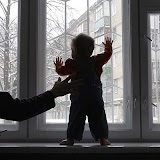
My son Jacob peers out the window. No, this photo has nothing to do with this post, beyond the fact that I shot it last week.

Sometimes I spend a lot of time applying for grants and it looks like a giant waste of time. But then, when I actually win something, it all feels worthwhile.

This week I am celebrating two wishes granted.

I was accepted by the New York Foundation for the Arts to participate in their MARK Program for artist professional development.

And I received a grant from the National Press Photographers Association for Multimedia Immersion.

Both will be great programs.

Unfortunately, the third grant I won recently — a Rotary International month-long exchange to Taiwan — I had to decline because my life is too full right now. Maybe next year.

1.06.2011

I am flattered...


This week, I am flattered to report, my local paper ran a lovely profile story about me and my new Fracking Pennsylvania photography project.

Here is what managing editor Cassandra Miller wrote in her kind intro:

The area seems to be teeming with artists of all types. I was overwhelmed by responses after asking friends (via Facebook) for suggestions of artists to feature.

One of the suggestions was Oneonta-based professional photographer Michael Forster Rothbart, who I’d met but hadn’t seen his work (or his impressive resume) until this week.

Not only is he a nice guy, he’s a talented photographer and artist, and he’s newly back from a yearlong Fulbright Fellowship to work on his “After Chernobyl,” an independent documentary photography project about Chernobyl survivors in Ukraine.

His photos have appeared in the New York Times, Newsday, Psychology Today and the Washington Post, to name a few. Forster Rothbart shared some of the photos from his “Fracking Pennsylvania” project on the hydraulic fracturing situation in Northern Pennsylvania and upstate New York. His photos, along with their stories, are captivating.

Read the full article here and here.

1.03.2011

Happy New Year!

My son Jacob and I built and photographed this winter scene together. Jacob, who is already 4 1/2, says he wants to be a photographer when he grows up. Or a fire dog. Or a T-rex.
2010 has been a wonderful year for us, and we hope it was great for you as well.

In the coming year, I hope our lives (yours and ours) are full of activities and people that bring us joy and happiness. May our days be free from worry and our nights free from fear.

It may sound cheesy but I mean it. Happy new year!

12.05.2010

Fracking exhibit opens 12/7

Some photos from my new project Fracking Pennsylvania are in an exhibit opening this week in New York City.

In Dimock, PA, Craig and Julie Sautner are among 14 families whose drinking water wells became contaminated after gas drilling on their properties. Here the Sautners drive by a new drilling rig on a neighbor’s property.

FRACKING: Art and Activism Against the Drill
An art exhibition and public dialogue about the ravages of natural gas drilling

Dates: December 7, 2010 - February 5, 2011
Opening Reception: Tuesday, December 7, 7-9pm

Exit Art
475 10th Avenue, at 36th Street
New York, NY 10018
www.exitart.org/exhibition_programs/current_programs.html

Exit Art announces Fracking: Art and Activism Against the Drill. Hydraulic fracturing (“fracking”) is a new means of gas extraction that is now beginning in New York and Pennsylvania. This exhibition will expose this process of gas extraction that is contaminating water supplies and polluting the air worldwide. Artists were invited to submit documentary videos, photography, paintings, sculpture, mixed media, and works of literature. Through public lectures and calls to action, this exhibition will engage the public in dialogue on this issue, and encourage audiences to continue educating themselves and their communities on fracking and its detrimental effects.

Organized by Lauren Rosati, Assistant Curator, with Peggy Cyphers, Ruth Hardinger, and Alice Zinnes.

ABOUT FRACKING
Hydraulic fracturing (“fracking”) is a means of gas extraction that accesses gas trapped more than a mile below the earth’s surface. When a well is fracked, small earthquakes are produced by the pressurized injection of millions of gallons of fresh water combined with sand and chemicals, releasing the gas, as well as toxic chemicals, heavy metals and radioactive materials that contaminate air and water.

Read more about the exhibit here.
See more of my photos here.

11.03.2010

Nanotech story for the Washington Post

Last week I shot a story for the Washington Post about nanotech research at the University of Albany. It ran today. I particularly liked this portrait, which I shot from under the honeycomb tabletop where he was working.

Caption: ALBANY, NY - OCTOBER 26: Willie Murchison, IBM Senior Lab Technician, plans recipes for upcoming experiments at a laptop in the NanoFab North cleanroom at the College of Nanoscale Science and Engineering. Researchers in the CNSE NanoTech Complex at the University of Albany-SUNY are developing new nanotechnology materials in an enormous 35,000 square-foot cleanroom. 2010. (Photo by Michael Forster Rothbart/For the Washington Post).
The light in a cleanroom is bizarre, so yellow that my camera could not compensate for it. So I put a flash on a stand to clean up the edges a bit and set my WB on Flash.

See the rest of the photo essay here.

Permalink: www.washingtonpost.com/wp-dyn/content/article/2010/11/02/AR2010110205134.html

10.30.2010

skeletons in his closet


Got a skeleton in your closet? John Hawks does. His physical anthropology lab at the University of Wisconsin contains cupboards full of skulls and bones. These skeletal remains and reproductions used for teaching range in age from decades to millennia old.

Hawks, an associate professor of anthropology, has published genome research revealing that the rate of human evolution has increased over the last 10,000 years.

I shot this photo for Science Illustrated last time I was in Madison, but it didn't get used (they ran a portrait I shot instead).

Anyway, I just wanted to say

HAPPY HALLOWEEN EVERYONE!

9.27.2010

Out in the mountains

A group of backpackers, including Katie Peeso and Carolyn Rein, sing spiritual songs beside their campfire at Crane Mountain Pond, elevation 2620 feet, in Adirondack Park near Johnsburg, NY. The hikers are college students participating in the LIFT program, a semester-long discipleship and leadership training program operated by Camp-of-the-Woods, a Christian family resort and conference center in Speculator, NY.
This week I spent time up in the Adirondacks shooting the beautiful fall foliage. One night I ran into this group of Christian college students camping and singing up on Crane Mountain.

I have to thank Strobist for changing what I carry in my bag. In the past, I would not have hauled flashes and pocket wizards up such a seriously steep mountain, just in case. Today I do, and this photo is why.

Tech geek details:
Lens (mm): 20
ISO: 1250
Aperture: 4
Shutter: 1/60
White Bal.: Flash

1 Nikon SB-26 flash on a rock at right, with orange (1/2 CTO) gel, about 1/8 power, just skimming the smoke and background boulder.

What color temperature is a campfire, anyway? I shot some frames on Tungsten and the fire still looked orange but the fill flash light looked too neutral to match it.

/* Google Analytics code: ----------------------------------------------- */